

No Products in the Cart

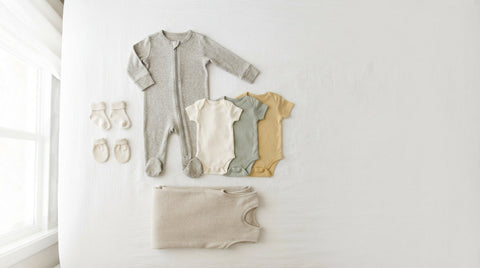

Short answer: wash new baby clothes once before the first wear, use a fragrance-free, dye-free detergent in the amount on the label, rinse well (use an extra rinse setting if your washer has one), and be careful with scented softener and dryer sheets. The National Eczema Association (NEA) and the American Academy of Dermatology (AAD) recommend fragrance-free, dye-free laundry products for eczema and sensitive skin. A 2009 American Academy of Pediatrics (AAP) page and a 2024 Consumer Reports article say a baby-specific detergent is often unnecessary unless your baby's skin shows irritation or your pediatrician recommends one. The sources also disagree on fabric softener. If a rash appears or does not clear up, ask your pediatrician.
This guide is general information, not medical advice, and none of the pages we read reports a test of wash routines on babies' skin. Product details in our listings come from our suppliers and we have not verified them. Last updated: November 16, 2026.
About this guide: we are an online store and we sell baby clothes, so we have a commercial interest in this topic. We do not test the products we sell. This guide summarizes pages from the National Eczema Association (a nonprofit patient organization that also runs a product Seal of Acceptance program), the American Academy of Dermatology (a professional society), the AAP's HealthyChildren.org site, Nemours KidsHealth, Consumer Reports, the US Consumer Product Safety Commission (CPSC), the Federal Trade Commission (FTC) and Mayo Clinic, listed at the end. Where we quote a number from one of our own listings, it is the supplier's figure. Prices can change, so check the product page. Where a suggestion or a reading is our own, we label it.
| Question | What the sources say | Source |
|---|---|---|
| Wash new baby clothes first? | Yes. NEA says new clothing can have a finish on it. HealthyChildren says to wash all clothes before use, except outerwear such as coats. The AAD page gives no guidance on this | NEA; HealthyChildren, 2009; AAD |
| Which detergent? | Fragrance-free and dye-free for eczema or sensitive skin (AAD, NEA). A regular detergent is fine unless irritation appears (HealthyChildren, 2009). No baby-specific detergent is needed unless a pediatrician recommends it (Consumer Reports, 2024) | AAD; NEA; HealthyChildren; Consumer Reports |
| Does a "free and clear" label settle it? | No. A Consumer Reports chemist warns it does not guarantee a child will not react | Consumer Reports |
| Liquid or powder? | Liquids tend to leave fewer residues than powders (NEA). A regular liquid can rinse out easier than powder (Nemours) | NEA; Nemours KidsHealth |
| How much detergent? | Follow the label. Too much can leave residue that could increase sensitivity, and 2X or 10X detergents need less | Consumer Reports |
| Extra rinse? | Use the washer's extra rinse setting if it has one | NEA |
| Fabric softener and dryer sheets? | Sources disagree. Nemours says to avoid softeners and anti-static products. NEA says to consider a liquid fabric softener | Nemours; NEA |
| Wash with the family's laundry? | Many parents do without problems (HealthyChildren). Unlikely to irritate unless the baby has allergies, eczema or another sensitive-skin condition (Nemours). NEA says to consider washing a sensitive-skin person's clothes separately | HealthyChildren; Nemours; NEA |
| Stains? | Wipe or rinse breast milk, formula, spit-up and poop stains while fresh, then soak in water and detergent | HealthyChildren, 2009 |
| Sleepwear? | Federal rules require sleepwear above size 9 months to be flame resistant or tight-fitting, and care labels protect flame resistance | CPSC |
| Laundry packets? | Very concentrated. Store high and out of sight, never on top of the washer or dryer. Poison Help: 1 800 222 1222 | AAP HealthyChildren, April 5, 2024 |
| Do we sell laundry supplies? | We found no detergent, stain remover or laundry bag listings in our catalog. We sell baby clothing | Our reading of the listings |

The pages that address them agree on washing new items first and on fragrance-free, dye-free products for babies with eczema or reactive skin. They differ on whether every baby needs special laundry care, on washing baby items separately, and on fabric softener.
| Source | What it says | Date shown | Note |
|---|---|---|---|
| NEA, Laundry Care for People with Eczema | Choose hypoallergenic products free of dyes and fragrances. Liquids tend to leave fewer residues than powders. Use the extra rinse setting. Consider a liquid fabric softener, because studies are said to show a benefit for sensitive skin. Wash new clothing, and everything the baby touches (blankets, bedding, towels, plush toys), before first use. Consider washing a sensitive-skin person's laundry separately | No date shown | Nonprofit patient organization; written for eczema, not every baby; the softener studies are not named |
| NEA, About the Seal of Acceptance | Seal products are fragrance-free, free of NEA's Ecz-clusion List ingredients, pass at least one clinical safety test and are reviewed by an independent panel. Brands apply voluntarily and are licensed to use the logo | No date in the page text (metadata: August 2026 edit) | The testing guidelines ask for data from ages 18 and up (our reading: not baby-specific) |
| AAD, How can I find eczema friendly products? | For a child with eczema: fragrance-free, dye-free detergent; hot water for bedding; wash towels and bedding before use; look for the NEA Seal; loose-fitting 100% cotton, avoiding wool and synthetics such as polyester; cut tags off clothes | No review date (footer copyright 2026) | Professional society; silent on softener and on washing new clothes |
| Nemours KidsHealth, Laundering Your Baby's Clothes | Baby detergent is often unnecessary. Family laundry is unlikely to irritate unless the baby has allergies, eczema or another sensitive-skin condition. When switching detergents, test wash one piece. Avoid softeners and anti-static products. Cloth diapers: wash separately in hot water and double rinse | Reviewed June 2022 | Reviewed by Larissa Hirsch, MD; licensed to Dayton Children's; no guidance on new clothes, stains or bleach |
| HealthyChildren.org, Cleaning Baby Clothes | Wash all clothes before use, except outerwear. Many parents use the family's laundry without problems; use a milder detergent only if irritation appears. Detergents generally do not strip flame retardant from sleepwear, but soap flakes can. Wipe or rinse fresh stains, then soak | November 2, 2009 | AAP book excerpt by two pediatricians, about 17 years old; it suggests a detergent that "smells good," which conflicts with fragrance-free advice; no softener, bleach or drying advice |
| HealthyChildren.org, Laundry Room and Detergent Safety | Single-use packets are very concentrated. Keep products in original containers, high and out of sight, ideally locked, and never on top of the washer or dryer | April 5, 2024 | AAP; no individual author named |
| Consumer Reports, "Gentle" Laundry Detergents | Free and gentle detergents are generally free of allergen dyes, perfumes and optical brighteners, but the label does not guarantee a child will not react. Use the label dose, because too much leaves residue. Gentle formulas tend to clean less well; sheets and powders did worst | No date shown in the text we read | By Keith Flamer; products were picked by marketing terms, not ingredients; says nothing on extra rinses or softener |
| Consumer Reports, baby registry products | You do not need a baby-specific laundry detergent unless your pediatrician recommends it | January 10, 2024 | By Jodhaira Rodriguez; picks from staff who are parents |
| CPSC, Children's Sleepwear Regulations | Sleepwear above size 9 months must pass flammability tests or be tight-fitting. Each article needs a permanent label with care instructions that protect its flame resistance. Infant garments in size 9 months or smaller can be exempt | No date; the address includes "OLD" | Written for manufacturers; may be an archived page; names no detergent, softener or bleach |
| CPSC news release, sleepwear labels | Loose-fitting cotton T-shirts should not be used as sleepwear. Snug-fit tags say the garment is not flame resistant | June 26, 2000 | About 26 years old |
| FTC, Clothes Captioning | Care labels must say hand or machine wash, give a water temperature if hot water would harm the item, and say how to dry it | May 2014 | Business guidance for manufacturers |
| Mayo Clinic, Diaper rash diagnosis and treatment | If a product seems to trigger the rash, try a different brand of wipes, diapers or laundry soap. See a doctor if it worsens despite several days of home treatment | February 1, 2024 | By Mayo Clinic Staff; general diaper rash, not a laundry test |

This routine is ours. We built it from the pages above, and no source tested it as a whole. It is a starting point, not medical advice.
| Step | What to do | What the step draws on |
|---|---|---|
| 1. Read the label | Check each garment's care label for hand or machine wash, water temperature and drying | FTC |
| 2. Wash new items first | Wash new clothes, hand-me-downs, blankets, bedding and towels before the baby uses them. Outerwear such as coats is the one exception HealthyChildren names | NEA; HealthyChildren |
| 3. Pre-treat stains | Wipe or rinse fresh stains, then soak in water and detergent | HealthyChildren |
| 4. Pick the detergent | A fragrance-free, dye-free liquid. Check the ingredient list, because the front label may not settle it | AAD; NEA; Consumer Reports |
| 5. Measure and rinse | Use the label amount (less of a 2X or 10X concentrate) and the extra rinse setting if your washer has one | Consumer Reports; NEA |
| 6. Softener and dryer sheets | Skip scented ones. If you try a softener, choose a fragrance-free, dye-free one on a single load and watch your baby's skin (the sources disagree) | Nemours; NEA; our suggestion |
| 7. Dry | Dry as the label says. None of the baby clothing pages we read gives a dryer temperature | FTC; our reading |
| 8. Change one thing at a time | When you switch detergents, test wash one piece first, so you can tell what caused a reaction | Nemours; our suggestion |
| 9. Ask for help | If a rash appears or does not improve, stop the new product and talk to your pediatrician | Mayo Clinic; our suggestion |
Labels do not settle the question. Consumer Reports picked the products in its gentle detergent article by marketing terms such as free, clear, hypoallergenic and pediatrician recommended, not by ingredients, and then checked each for fragrance, dye and brighteners.
| Label or feature | What the sources say | Our reading |
|---|---|---|
| "Free and clear" or "free and gentle" | Generally free of allergen dyes, perfumes and optical brighteners (Consumer Reports), but a CR chemist warns it does not guarantee a child will not react | A starting point, not a guarantee |
| "Hypoallergenic," "sensitive skin," "pediatrician recommended" | Consumer Reports calls these buzzwords and quotes an analyst saying to be wary of marketing | Check the ingredient list |
| "Fragrance" listed | The CR chemist says to be wary of the generic word and to check that individual chemicals are listed, or ask the maker. CR flags fragrance, dyes and brighteners as possible irritants | Look for fragrance-free with no fragrance listed |
| "Baby" on the label | Often unnecessary (Nemours; Consumer Reports). A milder baby or fragrance-free adult detergent only if irritation appears (HealthyChildren, 2009) | Ingredients matter more than the word "baby" |
| NEA Seal of Acceptance | Fragrance-free, no Ecz-clusion List ingredients, clinical safety testing and independent review. Brands apply voluntarily and are licensed to use the logo | A useful filter, but the testing guidelines ask for adult data, so we treat it as one signal among several |
| 2X or 10X concentrates | More concentrated, so less is needed; too much can leave residue (Consumer Reports) | Measure with the cap, not by eye |
| Liquid, powder, sheets, packets | Liquids tend to leave fewer residues than powders (NEA; Nemours). CR says powders and sheets did worst on cleaning among the gentle detergents it tested and does not recommend sheets. The AAP says packets are very concentrated and traditional detergent is much less toxic | A plain liquid is what these pages point toward |
Our reading: for a home with a baby, a plain fragrance-free liquid detergent is the choice most of these pages point toward. No source we read tested detergents on babies' skin, so what works for your baby is partly trial and error, as NEA itself says.
| Topic | What the sources say | Source |
|---|---|---|
| Fabric softener: avoid | Softeners and anti-static products often contain chemicals and fragrances that can irritate skin | Nemours KidsHealth |
| Fabric softener: consider | Consider a liquid fabric softener, because studies are said to show a potential benefit for people with sensitive skin | NEA |
| Not addressed | The AAD page, the 2009 HealthyChildren page and the Consumer Reports gentle detergent article do not discuss softener | Our reading |
| Dryer sheets | Nemours says to avoid anti-static products. The NEA page we read does not mention dryer sheets | Nemours; NEA |
| Extra rinse | Use the second or extra rinse setting if the washer has one. Nemours recommends a double rinse for cloth diapers | NEA; Nemours |
| Residue | Too much detergent can leave residue that could increase sensitivity | Consumer Reports |
Our reading: this is a real disagreement. NEA's page does not name its studies or say whether the softener should be fragrance-free, and Nemours advises avoiding softeners that contain fragrances. If you try one, our suggestion is a fragrance-free, dye-free product on a single load while you watch your baby's skin. Skipping it is the simpler path.

| Topic | What the sources say | Source |
|---|---|---|
| New clothes | Wash before use, because new clothing can have a finish on it to make it more appealing in the store | NEA |
| Newborns | Wash all clothes before use, because newborns have sensitive skin and you do not know who handled the clothing. Outerwear such as coats is an exception | HealthyChildren, 2009 |
| Hand-me-downs | The same "you do not know who handled it" reasoning applies to secondhand clothing (our reading) | Our reading |
| Other baby items | Wash plush toys, bedding, blankets, parent and caregiver clothes and towels before first use | NEA |
| Small items | Put socks in a mesh bag and fasten Velcro tabs before washing | HealthyChildren, 2009 |
| Tags | For a child with eczema, cut tags off clothes | AAD |
| Stains | Wipe or rinse breast milk, formula, spit-up and poop stains while fresh, soak in water and detergent, keep a stain remover on hand and set aside a soaking spot | HealthyChildren, 2009 |
| Cleaning power | Gentle formulas tend to clean less well. Consumer Reports' laundry expert says that may matter less for people with sensitivity concerns | Consumer Reports |
| Bleach and temperature | None of the baby clothing pages we read gives bleach or water temperature advice for everyday clothes, so follow the care label | Our reading; FTC |
The 2009 page does not name a stain remover, and we found no source that tested stain removers for babies' skin. Our suggestion is to read a stain remover's label the way you read the detergent label, and to try it on one item first.

| Topic | What the sources say | Source |
|---|---|---|
| Federal rule | Children's sleepwear above size 9 months and up to size 14 must pass flammability tests or be tight-fitting as defined by specified dimensions | CPSC |
| Infant garments | A garment sized 9 months or smaller is not required to meet the standard if it meets size limits and carries a label stating its intended age in months | CPSC |
| Snug-fit tags | Snug-fitting sleepwear carries a hangtag and neck label saying it is not flame resistant and should fit snugly | CPSC, 2000 |
| Loose cotton | Loose-fitting cotton or cotton blend T-shirts and similar clothing should not be used as children's sleepwear | CPSC, 2000 |
| Care labels | Each article needs a permanent label with instructions to protect it from chemicals or other treatments that can reduce flame resistance | CPSC |
| Detergent | Detergents generally do not strip flame retardant, but soap flakes can. The CPSC page names no softener, bleach or detergent | HealthyChildren, 2009; CPSC |
Our reading: two pages point in different directions on fit. The AAD page for children with eczema says to choose loose-fitting 100% cotton clothes, while the CPSC says loose-fitting cotton should not be used as sleepwear. The AAD page does not separate daywear from sleepwear, so for pajamas we follow the CPSC's snug-fit or flame-resistant rule, and you can ask your pediatrician how to balance them. Keep the care label either way.
| Topic | What the sources say | Source |
|---|---|---|
| Packets | Very concentrated; they dissolve quickly on contact with water, wet hands or saliva. Keep them in the original container until loading, and not in baskets or on counters | AAP HealthyChildren, 2024 |
| Storage | Keep all laundry products in original labeled containers, up high and out of sight, ideally locked. Not on top of the washer or dryer or in drawers under the machines | AAP HealthyChildren, 2024 |
| Exposure | If a child gets packet contents in the mouth or eye, call Poison Help at 1 800 222 1222. US poison centers took 1,423 reports of packet exposure in children age 5 and younger in January and February 2024 | AAP HealthyChildren, 2024 |
| Switching detergents | Test wash one piece. If a reaction follows, stay with the baby detergent a little longer | Nemours |
| A suspected product | Try a different brand of wipes, diapers or laundry soap. See a doctor if the rash gets worse despite several days of home treatment | Mayo Clinic |
We cannot tell you what is causing a rash. If your baby's skin looks worse, is spreading, is cracked or looks infected, or your baby seems unwell, contact your pediatrician.
| Source | What it is | How we read it |
|---|---|---|
| NEA laundry and Seal pages | A patient organization's advice and a certification program | Useful filters; written for eczema; adult test data; softener studies not named |
| AAD page | A professional society's list for children with eczema | Fragrance-free, dye-free guidance; silent on softener and new clothes |
| Nemours and HealthyChildren (2009) | Pediatric health pages | Reassuring about regular laundry for most babies; the 2009 page is old |
| Consumer Reports | A consumer magazine's lab tests and staff picks | Practical on labels and residue; the tests measured cleaning, not babies' skin |
| CPSC, FTC | Federal guidance, mostly for manufacturers | Rules on sleepwear and care labels, not laundry advice |
Our reading: the sources agree on washing new items, on fragrance-free, dye-free products for babies with eczema or reactive skin, and on keeping detergent out of reach. They do not agree on baby-specific detergent for every baby, separate washing, or softener. None of the pages we read reports a trial of wash routines on babies' skin, and none gives a dryer temperature or a stain remover to recommend. So we give a range, label our own routine, and leave the decisions that depend on your baby's skin to you and your pediatrician.
| Check | What to look for | Why it matters |
|---|---|---|
| Fiber content | 100% cotton, organic cotton or a blend, with percentages | The AAD page for children with eczema recommends 100% cotton and names wool and synthetics such as polyester as possible triggers |
| Care instructions | Machine or hand wash, temperature and drying | FTC care labels carry this on the garment, but many listings do not repeat it |
| Sleepwear labels | A snug-fit hangtag or flame-resistant label on pajamas above size 9 months | The CPSC rule applies above that size (our reading: check the garment on arrival) |
| Certifications | A named certification (such as OEKO-TEX or GOTS) and ideally a certificate number | Without a number, it is a supplier claim we cannot verify |
| Tags and closures | Tagless or removable tags, zipper guards, snaps | The AAD page says to cut tags off clothes for a child with eczema |
| Sizes and claims | Which sizes the price covers; "gentle on sensitive skin" or "non-irritating" wording | Titles often show one size; skin claims are supplier claims we have not verified |
| Title and text that disagree | Brand, fiber, size or contents | A few listings below have one; ask before you order |

These are 10 of our active listings for baby sleepwear and rompers, read in full on November 16, 2026. The figures are the suppliers' figures. We have not verified or tested any of them, and you should check the product page for the current version. Prices are the lowest price shown for the listing.
| Listing | Price | Fabric and details as listed | What to check |
|---|---|---|---|
| The Children's Place snug fit pajama set, short sleeve, 0 to 3 months | $36.75 | 100% cotton; snug fit; elastic waist; banded cuffs; the text says "Not flame resistant (Designed for snug fit)" | The text calls it a Boys' set, the title says Baby and Toddler; no care instructions; "meet safety standards" is a supplier claim, so check its labels on arrival (our suggestion) |
| The Children's Place snug fit pajama set, long sleeve, Monster Trucks | $40.44 | 100% cotton; snug fit; top and pants | The title gives no size, so choose one on the product page; "gentle on sensitive skin" is a supplier claim; no care instructions |
| little planet by carter's organic cotton pajamas, 18 months | $38.27 | "Certified organic cotton"; 2 piece set; unisex | The certification is not named; the text does not say whether the set is snug fit or flame resistant, which matters above size 9 months (our reading); no care instructions |
| Teach Leanbh 2 pack cotton pajamas, short sleeve, 6 to 12 months | $56.10 | 100% cotton; 2-way zipper; zipper guard cover | Titled pajamas, romper and sleep and play; no snug-fit or flame statement; no care instructions |
| Cotton Newborn Romper, Swan+Koala | $38.39 | 100% cotton; double zipper; the text lists "Machine wash with mild detergent; Air dry; Do not bleach" | The only listing here with wash, dry and bleach instructions in its text; "mild detergent" is not defined; sizes are not in the text |
| Cherie Kids organic cotton romper, 0 to 24 months | $45.55 | "100% certified organic cotton"; snaps; the text says machine washable | The certification is not named; sizes are in the title but not itemized; "protects sensitive skin" is a supplier claim |
| Unisex baby bodysuit, long sleeve, 9 to 12 months, polar bear | $36.80 | Bottom snaps; lap shoulders; sizes 0 to 3, 3 to 6, 6 to 9 and 9 to 12 months in the text | The title says "100% Organic Cotton" but the text says "100% cotton"; the text opens with a different brand name; no care instructions |
| Baby Cotton Romper, Western and Dino prints | $29.78 | 100% cotton; reversible 2-way zipper; zip guard; sizes 0 to 3 through 12 to 18 months | The text says to follow the label but gives no care instructions; "sell out" wording is promotion, not product information |
| Baby Bunny Romper, GOTS certified cotton | $70.16 | "100% GOTS Certified Organic Cotton exterior"; adjustable | The text has placeholder-style wording ("The primary keyword in the product's title") and an "easy-to-strap design" that does not clearly describe a romper; no sizes; no certificate number |
| DREAMLAND bamboo viscose pajamas, 0 to 24 months | $64.91 | Bamboo viscose; "STANDARD 100 by OEKO-TEX certified materials"; two-way zipper; tagless; mittens for 0 to 6 months | The certification has no certificate number; the AAD page recommends 100% cotton and does not discuss bamboo viscose; no care instructions |
| Your situation | Prioritize | Why |
|---|---|---|
| You are preparing for a newborn | A small first set that you wash before use | NEA and HealthyChildren say to wash new items first; buying fewer pieces at first is our suggestion |
| Your baby has diagnosed eczema or reacts to products | Your pediatrician's advice, then 100% cotton and fragrance-free, dye-free laundry products | The AAD page for children with eczema recommends both |
| Your baby has no skin problems | Your usual routine, with a first wash | HealthyChildren and Nemours say regular laundry is unlikely to irritate most babies |
| You want pajamas | A snug-fit hangtag or flame-resistant label, plus the care label | CPSC rules for sleepwear above size 9 months; two of our pajama listings state snug fit in their text |
| You want an easy-care everyday romper | A listing that states fabric and care instructions | Only the Swan+Koala listing gives wash, dry and bleach instructions in its text |
| A budget under $40 | The Western and Dino romper ($29.78), the bodysuit ($36.80), the short sleeve snug fit set ($36.75), the little planet set ($38.27) or Swan+Koala ($38.39) | These are the listings priced under $40; the long sleeve snug fit set is $40.44 |
These items are listed in our baby clothes collection and our organic cotton bodysuit collection. We do not test them, so use the checks above.
Our shipping policy explains how delivery works, and our refund policy explains returns, including what can and cannot be returned. Read both before you order, and check the size and fabric first.
NEA says to wash new clothing before use, because it can have a finish on it. HealthyChildren says to wash all clothes before use, except outerwear such as coats. The AAD page we read gives no guidance on this.
Not necessarily. HealthyChildren (2009), Nemours and Consumer Reports say a baby-specific detergent is often unnecessary unless the baby shows irritation or a pediatrician recommends one. NEA and the AAD recommend fragrance-free, dye-free products for eczema and sensitive skin, and a Consumer Reports chemist warns that a "free and clear" label does not guarantee your child will not react.
The sources differ. HealthyChildren says many parents use the family's laundry without problems, and Nemours says that is unlikely to irritate unless the baby has allergies, eczema or another sensitive-skin condition. NEA says to consider washing a sensitive-skin person's clothes separately.
Nemours says to avoid softener. NEA says to consider a liquid fabric softener and to use the extra rinse setting if your washer has one. Consumer Reports adds that too much detergent can leave residue, so measure by the label.
HealthyChildren says to wipe or rinse them while fresh, soak in water and detergent, and keep a stain remover on hand. We found no source that tested stain removers for babies' skin.
None of the baby clothing pages we read gives a temperature for everyday clothes. The AAD says to wash bedding in hot water for a child with eczema, and Nemours says hot water for cloth diapers. FTC rules say a care label must give a water temperature if regular use of hot water would harm the item, so follow the label.
The AAP says packets are very concentrated and gives storage rules: original container, high and out of sight, ideally locked, never on top of the washer or dryer. If a child gets the contents in the mouth or eye, call Poison Help at 1 800 222 1222.
HealthyChildren says detergents generally do not strip flame retardant from sleepwear but soap flakes can. The CPSC requires a care label on children's sleepwear to protect flame resistance, so follow it. Snug-fitting pajamas carry a tag saying they are not flame resistant.
Nemours suggests test washing one piece when you switch, and Mayo Clinic suggests trying a different brand of laundry soap if a product seems to trigger a rash. If the rash gets worse despite several days of home treatment, see a doctor.
No. We are an online store. Product details come from our suppliers, and we have not verified them.
Wash new baby items first, use a fragrance-free, dye-free detergent, measure it, rinse well, be cautious with scented softener and dryer sheets, and follow each garment's care label. The sources disagree on baby-specific detergent, separate washing and softener, so pay attention to your own baby's skin and ask your pediatrician if a rash does not clear up. Browse our baby clothes collection, and read our baby clothing basics guide for fabrics and sizes. Our shipping policy and refund policy explain delivery and returns.


