No Products in the Cart

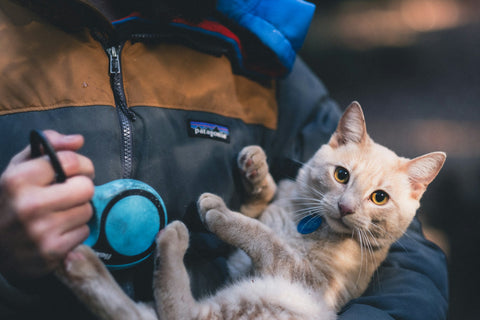

Short answer: a cat that drops a new toy within days often needs a different kind of play, not a bigger pile of toys. VCA Animal Hospitals says cats play in short bursts, need to catch the "prey" sometimes, and stay interested when toys are rotated. Wand toys are for play with you, food toys and motion toys fill the time when you are busy, and catnip only works for some cats. Every product shown below was priced under $50 on November 11, 2026. Our suggestion: buy one toy of each type instead of one big set, and see which one your cat chases.
This guide is general information, not veterinary advice. Ask a veterinarian about your cat's health, weight, diet or behavior. Last updated: November 11, 2026.
About this guide: we are an online store, and we do not test the products we sell. This guide summarizes pages from VCA Animal Hospitals, the Cornell Feline Health Center and the Feline Veterinary Medical Association, listed at the end, and it shows products that are in stock in our store right now. Product details such as materials, battery life and words like "safe," "durable" or "edible" come from our suppliers and are not verified by us. Prices can change, so check the product page. Where a suggestion is our own, we label it.
The sources do not say why one cat loses interest in a toy, but they agree on several things that make play work. The table shows what each page says.
| What to check | What the source says | Source |
|---|---|---|
| Short bursts | Cats tend to play in short bursts, so a brief session does not mean the cat dislikes the toys. | VCA (play) |
| Session length | Most cats benefit from several 10-minute sessions a day, best around morning and evening, when cats are most active. Another VCA page recommends at least three short sessions a day. | VCA (play, enrichment) |
| Prey-like toys | Toys that imitate prey, such as a mouse pulled along the floor or a feather wand, encourage play. | Feline VMA |
| A catch now and then | A cat needs to succeed sometimes or it loses interest. The Feline VMA says cats should be able to catch the toy at least occasionally to avoid frustration. | VCA (play), Feline VMA |
| Rotation | VCA suggests about 20 toys on hand, with 4 to 5 out at a time, rotated weekly. The Feline VMA and Cornell also say rotating toys keeps cats from getting bored. | VCA, Feline VMA, Cornell |
| Food puzzles | Food puzzles and food balls mimic hunting. If you use one for part of a meal, make sure the cat eats the full ration. | Feline VMA, VCA (enrichment) |
| Hands and feet | Do not let a cat pounce on hands or feet, because bites and scratches can become infected. In multi-cat homes, play with each cat on its own. | VCA (enrichment), Feline VMA |

Wand toys let you move the "prey" the way a real animal would. They are interactive, so they need you. VCA says never to leave a cat unattended with a wand or fishing-pole toy, because a cat can get tangled in the string or swallow it. Cornell also warns against thin, strand-like parts such as string or feathers that can come loose and be swallowed, especially when chewed. Our suggestions: end each game by letting the cat catch the toy, then put the wand away out of reach, and check the attachment before each session.

A food toy turns part of a meal into a hunt. VCA says to use a puzzle for part of the meal and to make sure the cat eats all of the food, because too few calories a day can cause serious illness. Our suggestions: start with a small amount of the cat's usual food, watch the first few sessions, and ask a veterinarian first if your cat has a diet or weight plan.
VCA suggests battery-operated toys, or a toy hanging from a doorknob, for times when you are not available, and lists motorized chase toys and balls in tracks among the toy types. Cornell advises against toys with electrical cords that a cat can chew. Our suggestions: check how a toy is charged, keep cords out of reach, and choose one a cat can catch sometimes, because a toy that never lets the cat win may frustrate it (this follows the VCA and Feline VMA points above). Listings that mention battery life, obstacle sensing or speed settings are supplier wording.
VCA says a cat's response to catnip is genetic and about 50% of cats do not respond. In cats that do respond, the effect is short-lived and can range from relaxation to excitement, and VCA says to avoid catnip if a cat becomes agitated. Some listings also mention silvervine, which the sources we read do not cover, so we make no claim about it. Our suggestion: if you do not know whether your cat responds, buy a small pack first.

VCA's rule is about 20 toys on hand, 4 to 5 out at a time, swapped weekly. You do not need 20 toys to start. Our suggestions: put one toy from each group above in the "out" group, keep the rest in a closed box, and swap one or two toys every week instead of all at once. Keep wands and other string toys in the box, not in the "out" group, unless you are playing.

Our shipping policy explains how delivery works, and our refund policy explains returns, including what can and cannot be returned. Read both before you order, especially for electronic toys.
VCA says most cats benefit from several 10-minute sessions a day, and another VCA page recommends at least three short sessions a day.
VCA suggests keeping about 20 toys, offering 4 to 5 at a time and rotating them weekly.
We cannot say for your cat. The sources point to a few possible causes: the toy cannot be caught, it is always out, or the cat plays in short bursts and you ended the game too soon. Try a session where the cat catches the toy at the end.
No. VCA says never to leave a cat unattended with a wand or fishing-pole toy.
No. VCA says about 50% of cats do not respond, because the response is genetic.
The sources we read do not cover laser pointers, so we make no claim. A veterinarian can advise you.
VCA says a puzzle can serve part of a meal, as long as the cat eats the whole ration. Ask a veterinarian if your cat has diet limits.
No. We are an online store. Product details come from our suppliers, and we have not verified them.
Try different kinds of play, let the cat catch the toy, and rotate a few toys at a time. Browse our cat toys, cat accessories and scratching posts, or see the whole cats collection. Our shipping policy and refund policy explain delivery and returns.